Self Development
September 02, 2026
By Kneelyo
6 min read
89 views
The Bad Side of AI: When Convenience Starts Killing Your Growth
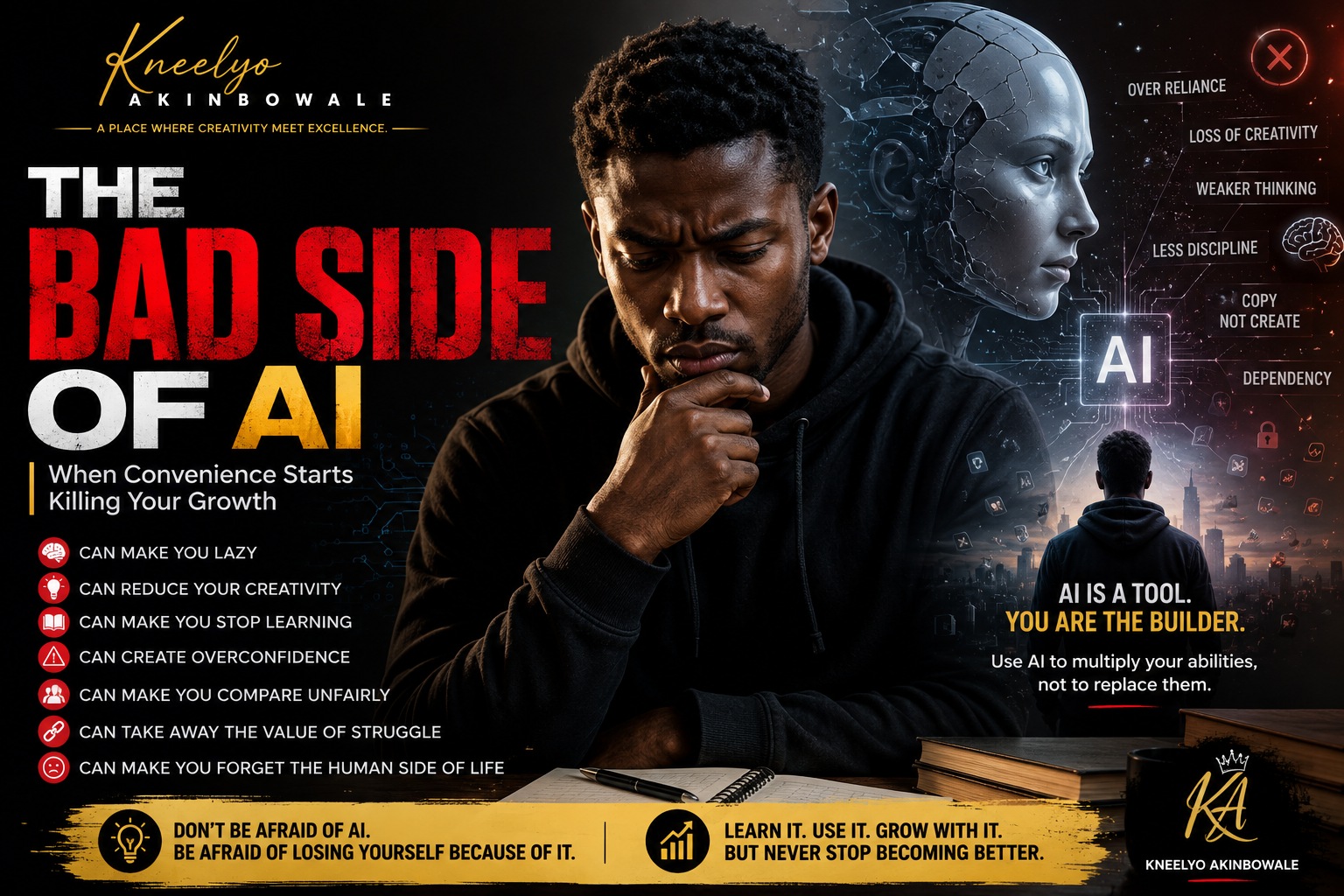
The Bad Side of AI: When Convenience Starts Killing Your Growth
By Kneelyo Akinbowale
By Kneelyo Akinbowale
Sponsored
Advertisement
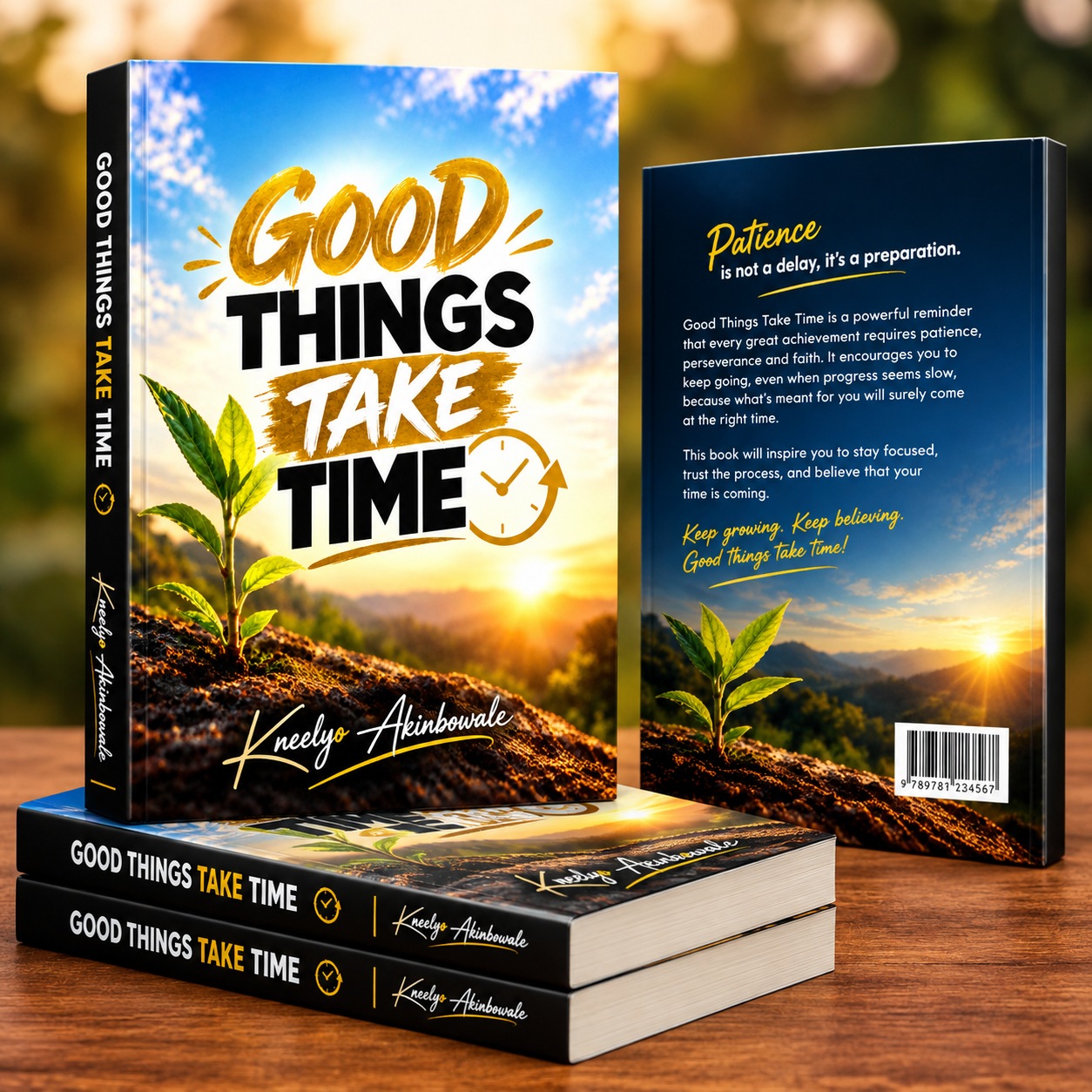
Good Things Take Time — Your Breakthrough Is Coming
GOOD THINGS TAKE TIME By Kneelyo Akinbowale Your journey may be taking longer than you expected—but that doesn’t mean you’re failing. Good Things Take Time is an inspiring ebook for anyone who feels stuck, discouraged, or tired of waiting for their breakthrough. Discover how to embrace your season, stay committed to your dreams, and trust the process—even when progress seems invisible. Your time will come. Keep going. Keep growing. Keep believing. 📖 Get your copy of Good Things Take Time today. By Kneelyo Akinbowale Inspiring minds. Transforming lives.
Learn More
Artificial Intelligence has become one of the most powerful tools of our generation.
It can help us write, design, research, learn, brainstorm, solve problems and accomplish tasks that once required hours or even days.
AI is making life easier.
But there is another side we don't talk about enough.
What happens when something designed to make our lives easier begins to make us weaker?
The problem isn't AI itself. The problem is what happens when we become so dependent on it that we stop developing the abilities AI was supposed to support.
AI Is a Tool, Not a Replacement for You
There is nothing wrong with using AI.
In fact, learning how to use AI effectively can give you an advantage in today's world.
But there is a difference between using a tool and depending on a tool.
A carpenter uses a hammer to build.
But the hammer doesn't replace the carpenter.
In the same way, AI should assist your thinking, creativity and productivity—not completely replace them.
When you allow AI to do everything for you, you may save time while losing something much more valuable: your ability to do things yourself.
The Danger of Becoming Too Comfortable
Human beings naturally love convenience.
If something difficult can be made easy, we usually choose the easier option.
That's where the danger begins.
If you always ask AI to write for you, you may stop improving your writing.
If you always ask AI to generate ideas, you may stop training your creativity.
If you always ask AI to solve problems, you may stop developing your problem-solving ability.
And if you always ask AI what to think, you may eventually forget how to think deeply for yourself.
Convenience can save time, but discipline builds capacity.
Don't sacrifice your growth simply because something can be done faster.
AI Can Affect Your Creativity
Creativity isn't always born from having the perfect idea.
Sometimes creativity comes from making mistakes.
You try something.
It doesn't work.
You try again.
You change something.
You experiment.
Eventually, you discover something unique.
But if you immediately ask AI for the answer every time you face a creative challenge, you may miss the process that develops your own creative ability.
AI can give you ideas.
But don't let it become the only source of your ideas.
Think before you ask. Create before you copy. Experiment before you surrender the process.
Getting an Answer Isn't the Same as Learning
This is especially important for students and people trying to develop new skills.
AI can provide an answer in seconds.
But receiving an answer doesn't automatically mean you understand the subject.
Real learning requires curiosity, practice, mistakes, reflection and repetition.
If AI gives you the solution to a problem, don't just copy it.
Ask yourself:
Why is this the answer?
How did we arrive at it?
Could I solve this myself next time?
Those questions turn AI from a shortcut into a learning partner.
AI Can Make Us Less Patient
We live in an age where people expect instant results.
Instant answers.
Instant designs.
Instant information.
Instant solutions.
But personal growth doesn't work that way.
You cannot download experience.
You cannot generate wisdom with one prompt.
You cannot replace years of practice with a few minutes of technology.
Some things still require time.
Some skills still require repetition.
Some dreams still require patience.
Don't allow the speed of technology to make you impatient with your own journey.
Don't Compare Your Journey With AI-Enhanced Results
Another problem is comparison.
Someone can now produce professional-looking content with the help of AI, and another person may look at it and feel inadequate.
But remember:
You are not competing against technology.
If someone uses AI to improve their work, learn from it. Don't use it as a reason to hate your own progress.
Use technology as inspiration, not as a weapon against your self-esteem.
Your goal should be to become better than you were yesterday.
AI Can Make Us Stop Thinking Critically
Not everything AI produces is automatically correct.
AI can make mistakes.
It can misunderstand questions.
It can provide incomplete information.
It can sometimes present incorrect information confidently.
That's why human judgment remains important.
Don't believe something simply because it sounds intelligent.
Check.
Question.
Research.
Think.
Your ability to distinguish truth from misinformation is one of the most important skills you can develop in the digital age.
Don't Remove Every Struggle From Your Life
This may be one of the biggest lessons we need to learn.
Not every difficult thing needs to be made easy.
Sometimes difficulty is part of the process.
A person becomes stronger by carrying responsibility.
A writer becomes better by writing.
A designer improves by designing.
A student grows by studying.
An entrepreneur develops through solving problems.
If AI removes every challenge, you may also remove some of the experiences that build your character.
Don't run away from every struggle. Some struggles are training.
The Right Way to Use AI
The answer isn't to stop using AI.
The answer is to use it intentionally.
Instead of saying:
"AI, do this for me."
Sometimes say:
"AI, teach me how to do this."
Instead of asking for the finished answer, ask for an explanation.
Instead of allowing AI to create everything, create your own first draft and use AI to improve it.
Instead of letting AI make every decision, use it to present different perspectives and make your own judgment.
That way, AI becomes your assistant—not your replacement.
Your Greatest Asset Is Still You
Technology will continue to improve.
AI will become more powerful.
The tools available to us tomorrow may be far more advanced than what we have today.
But one thing should never become outdated:
Your ability to think.
Your creativity.
Your discipline.
Your curiosity.
Your judgment.
Your ability to learn.
Your ability to communicate.
Your ability to solve problems.
Those are the qualities that make technology useful in the first place.
Final Thought
Don't be afraid of AI.
Learn it.
Use it.
Grow with it.
But don't become so dependent on it that you stop developing yourself.
Use AI to multiply your abilities, not to replace them.
Let it help you move faster, but don't forget to learn how to walk without it.
Because the greatest danger isn't that AI will become smarter than us.
The greater danger is that we may stop becoming smarter because we have AI to do everything for us.
Use the tool. Don't become the tool.
— Kneelyo Akinbowale